Gear Up for Riding Season: A Hitch Bike Rack Guide


Riding season is here, and more riders are getting ready for weekend getaways, camping trips, family tours, and outdoor adventures. Whether it is a short ride to a local trail or a longer road trip with bikes in tow, having the right bike rack makes every journey easier, safer, and more enjoyable.
Among different bike mounts for cars, the hitch bike rack stands out as one of the most stable and user-friendly options. It allows cyclists to carry bikes securely without taking up interior vehicle space or lifting heavy bikes onto the roof. From casual riders and family travelers to e-bike owners and outdoor enthusiasts, a reliable bicycle hitch rack offers a practical solution for bringing bikes along wherever the road leads.
Why Choose a Hitch Bike Rack?
Compared with other bike racks, hitch bike rack offers a better balance of convenience, stability, and everyday usability. Mounted at the rear of the vehicle, it supports easier loading, reliable on-road stability, and a more comfortable driving experience.
1. Easier Loading
Because the bikes sit lower behind the vehicle, there is no need to lift bicycles over the roof. This makes a hitch-mounted rack especially practical for heavier mountain bikes, e-bikes, and riders who want a simpler loading experience.
2. Stronger Stability
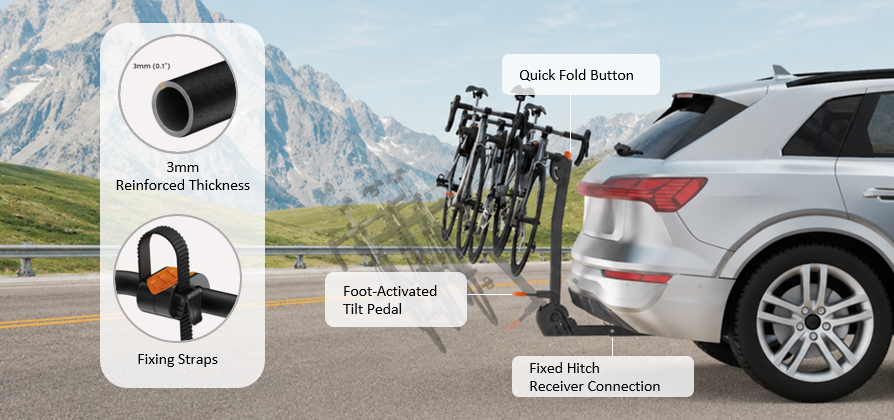
A hitch bike rack is built around a fixed connection to the vehicle’s hitch receiver, giving the rack a secure foundation during travel. Anti-wobble hitch pins, locking mechanisms, and fix & secure straps further reduce shaking and side-to-side movement, making it a reliable option for highway drives, longer trips, and carrying multiple bikes.
3. Better Driving Comfort
Key Buying Factors: Capacity, Compatibility, and Rack Style
For buyers, choosing the right bicycle hitch rack is not only about price. The best product depends on target customers, vehicle compatibility, bike type, and expected use scenarios.
1. Bike Capacity
A 2-bike model is suitable for individual riders, couples, and casual users. A 4-bike hitch rack is better for families, group riders, and weekend travelers. For rental businesses, outdoor tour operators, or high-volume retail markets, multi-bike capacity can be a strong selling point.
2. Weight Capacity
E-bikes, fat tire bikes, and heavy-duty mountain bikes often require more support than standard bicycles. A reliable hitch bike rack should offer enough total load capacity while also meeting the weight limit for each individual bike. This helps keep heavier bikes secure during daily drives, highway travel, and outdoor trips, while reducing stress on the rack over long-term use.
3. Hitch Receiver Compatibility
Most tow hitch bike racks are made for 1.25-inch or 2-inch hitch receivers, and choosing the correct size helps prevent rattling, instability, or installation issues. Clear compatibility details make it easier to find a rack that matches the vehicle.
4. Rack Style
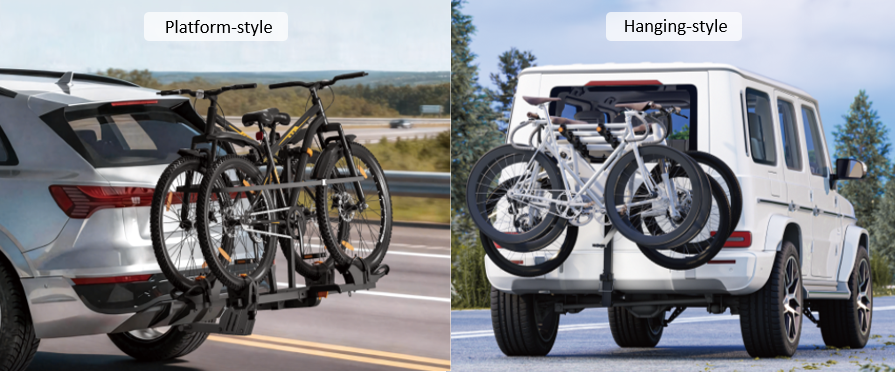
· Platform-style racks support bikes by the wheels, offering better stability and less frame contact. They are often preferred for e-bikes, fat-tire bikes, carbon-frame bikes, and mountain bikes.
· Hanging-style racks support bikes by the frame. They are usually lighter, more affordable, and easier to store. This makes them suitable for casual cyclists, entry-level markets, and price-sensitive customers.
Installation, Safety, and Maintenance Tips
For retailers and distributors, sharing some simple tips through manuals, blog content, or after-sales emails can reduce complaints, improve user confidence, and build stronger long-term trust in your brand.
Before installation, confirm the hitch receiver size matches the rack, then secure it with the correct bolts, locking pins, or anti-rattle device. Once installed, hold the rack firmly and shake it side to side and front to back to check for looseness, rattling, or an unstable fit. If the rack moves noticeably, tighten the connection again before loading bikes or driving.
When loading bikes, place the heaviest bike closest to the vehicle to reduce stress on the rack. Each bike should be fixed with the straps, clamps, or wheel holders, and loose accessories such as bottles, pumps, or bags should be removed before driving. Also, keep in mind the added vehicle length when parking, reversing, or maneuvering in tight spaces.
Rain, mud, road dust, and frequent loading can affect a hitch bike rack over time. After trips, wipe down the rack, clean moving parts, lubricate locks or folding joints when needed, and check straps, clamps, wheel trays, and bolts for wear.
Final thoughts
A hitch bike rack is more than a seasonal add-on. With easier loading, stable rear-mounted support, strong weight capacity, and practical safety features, it is a reliable category for riders who need a secure way to transport bikes throughout the riding. For product selection, the best options are those that combine vehicle compatibility, e-bike support, durable construction, and everyday convenience.