Bringing Your Product Vision to Life: Inside LUMI’s R&D


As of 2026, LUMI has served partners in more than 100 countries, built a portfolio of over 27,000 items, secured more than 1,000 patents, and supported a wide range of OEM and ODM projects. Behind these achievements is an end-to-end R&D system refined over more than 20 years, integrating design, engineering, prototyping, quality verification, and manufacturing.
How LUMI Develops a New Product
At LUMI, every new product follows a structured path from product definition and design to prototyping, tooling, pilot production, mass production and feedback. Quality control is built into this entire R&D process, with each stage verified and refined before moving forward.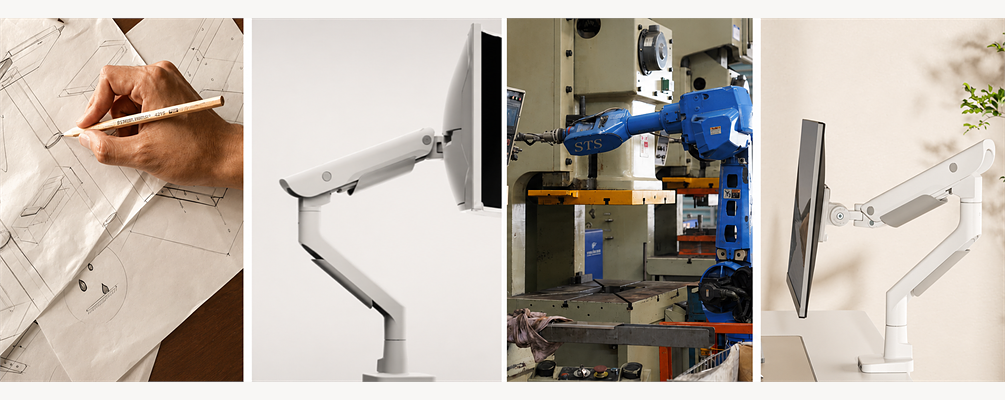
From an Idea to a Design
The process begins by defining the product direction around customer requirements, target applications and end-user needs. Comparable products and market gaps are also assessed to identify meaningful points of practical differentiation.
Industrial designers translate these insights into product concepts, shaping appearance, proportions, usability and fit for the intended environment. Mechanical engineers then develop the structure through 3D modeling and analysis, refining materials, load capacity, adjustment mechanisms and assembly. Close collaboration keeps form, function and manufacturability aligned from the outset.
Once the design is completed, testing becomes essential for every physical stage that follows—including prototypes, mold samples, and pilot production runs. Backed by our in-house UL/TÜV witness testing laboratory, products are tested according to their development phase. These evaluations cover load capacity, life cycles, safety, functionality and other relevant tests to guarantee quality from start to finish.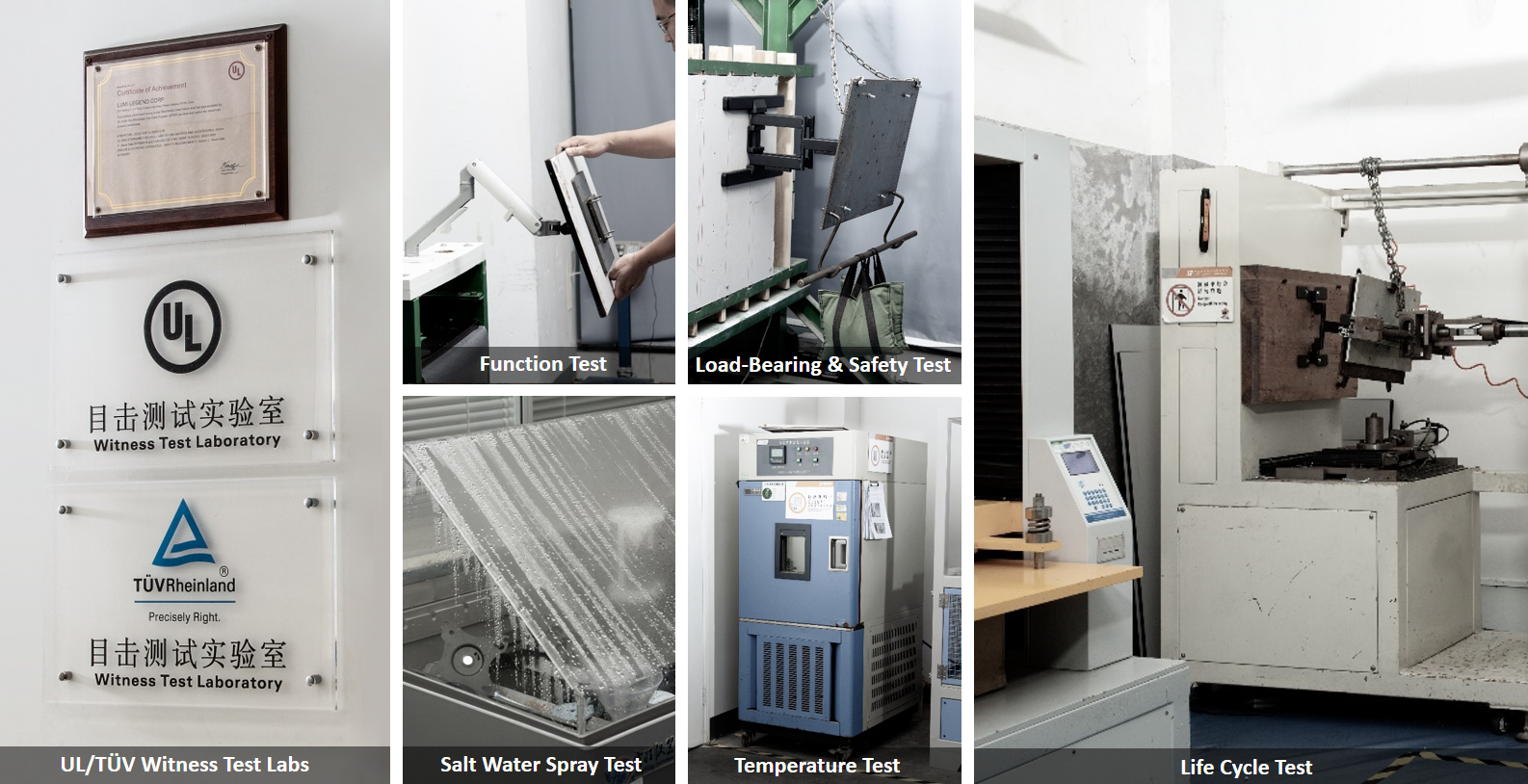
Prototype Creation
At this stage, digital designs are turned into physical prototypes using technologies such as CNC machining and 3D printing. Initial functional evaluations, structural fit checks, and user experience assessments allow engineers to verify structural feasibility and spatial proportions. Catching potential design flaws before tooling begins minimizes costly mold modifications and keeps the project moving efficiently.
After the prototype design is approved, tooling is developed and mold samples are produced under conditions that more closely reflect actual manufacturing. This stage helps determine how effectively the approved design translates into a production-representative product.
The samples undergo function testing, package testing and user-experience evaluation to assess their overall performance and reliability. The findings guide further refinement before pilot production, supporting a smoother transition to manufacturing.
Manufacturing and Feedback
With the mold samples refined and approved, the project moves into pilot production, where the team checks whether the product and production process are ready for larger-scale manufacturing. Any fine-tuning identified during this trial run—along with internal testing feedback—is resolved before launching mass production.
During mass production, standardized IQC, IPQC, FQC, and OQC protocols ensure consistent quality across incoming materials, assembly, and final shipments.
After the product reaches customers, feedback, market data and after-sales findings continue to inform R&D. When an issue arises, interim action is taken first, followed by root-cause analysis. If the issue is linked to product design, structure, materials or an earlier development decision, the relevant stage is reviewed to improve the current product and guide future development.
How LUMI Keeps Innovation Flowing
Innovation does not happen only when a new project is officially launched. It also comes from the way teams observe the market, question existing solutions and keep exploring what could work better. At LUMI, these ideas are supported by a long-term internal innovation program and regular knowledge-sharing across the R&D team.
LUXIAOBAN Innovation Contest
Inspired by Lu Ban, the celebrated ancient Chinese engineer, inventor and carpenter, LUMI launched the “LUXIAOBAN Innovation Contest” to bring craftsmanship, creativity and engineering together.
Led by the R&D department, the contest brings industrial designers, mechanical engineers and product managers into cross-functional teams. Each team works as a compact product development unit, taking an idea through product design, structural engineering, prototyping and assembly. Over approximately eight months, teams explore opportunities within existing product categories, investigate new fields and work through technically demanding concepts.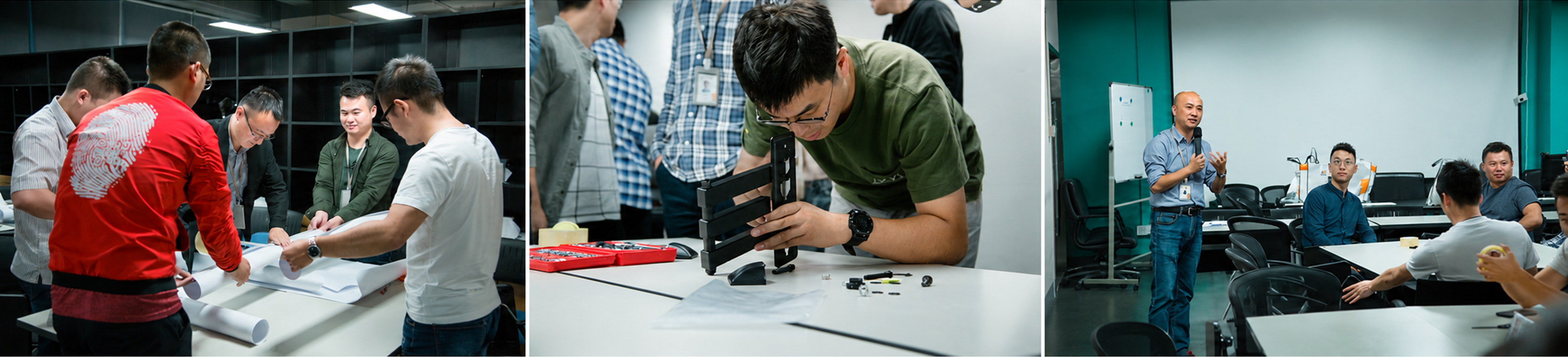
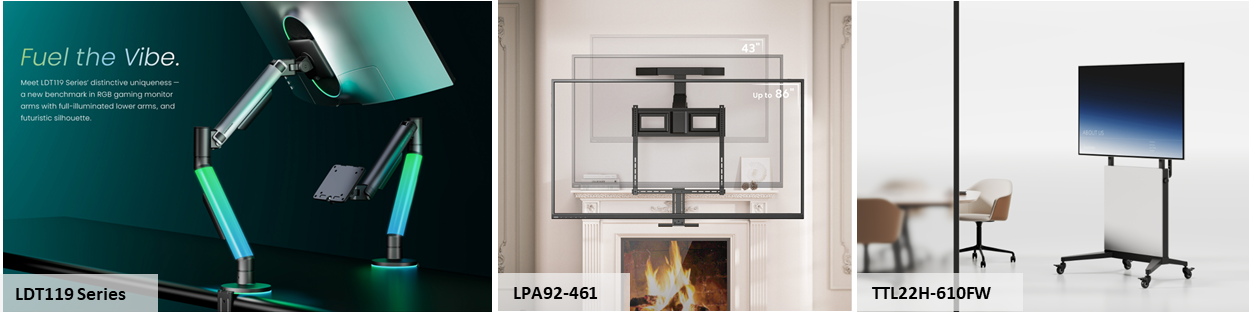
Since its launch in 2018, several entries have received recognition from the iF Design Award, Red Dot Design Award and Golden Pin Design Award. Selected concepts have also entered LUMI’s official product-development pipeline. Among them are the LDT119 Series EVERGLOW Gas Spring Monitor Arms, distinguished by an illuminated lower arm; the LPA92-461 Pull-Down Mantel TV Mount, developed for smooth and effortless height adjustment; and the TTL22H-610FW FreeLift TV Cart, whose weight-balanced design supports quick manual display positioning.
Innovation in Everyday Work
Industrial designers stay closely connected to market trends, emerging design directions and visual elements related to LUMI’s products through monthly knowledge-sharing sessions. These insights are translated into design exercises and reviewed through follow-up case discussions, helping keep product concepts visually relevant.
Mechanical engineers complement this design focus through competitor studies, internal discussions and regular technical sharing. Each month, LUMI’s patent engineers compile a patent bulletin covering relevant technologies and product categories, providing structured references for design, technical evaluation and future development.
Together, these ongoing learning practices turn fresh ideas, hands-on development experience and technical insight into stronger design and engineering capabilities—opening up new possibilities for both standard products and customized OEM/ODM projects.
Turning R&D into Lasting Value
At LUMI, R&D is a long-term commitment sustained by continuous innovation, systematic quality control and a strong culture of learning. Recognition from the iF Design Award, Red Dot Design Award and Golden Pin Design Award reflects the strength of this approach. For customers, it means working with a team equipped to turn ideas into practical, production-ready solutions and support projects from concept through manufacturing.
Have a product idea? Start your OEM/ODM project with LUMI today.